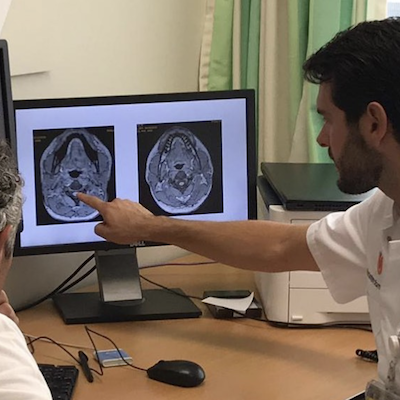
Natural History Study: The Dutch ALD Cohort
In order to develop effective treatments and understand how ALD progresses over time, it is necessary to carefully track patients from the time of diagnosis throughout their lifetime. This process is called a natural history study. Since 2015, we have been studying the world’s largest group of boys, men, and women with ALD through the “Dutch ALD Cohort” at the Amsterdam Leukodystrophy Center. One of the biggest challenges in ALD is that we cannot predict how the disease will affect each patient. Some patients develop severe symptoms early on, while others remain relatively stable for years. This unpredictability complicates the design of clinical trials to test new therapies and makes it difficult to know when to start treatment. Without knowing how quickly the disease typically progresses and which symptoms to measure, it’s nearly impossible to determine whether a new treatment is working. Our cohort study follows over 170 patients, conducting detailed assessments and collecting blood samples, brain scans, and clinical measurements at regular intervals. This comprehensive data has already revealed significant patterns in disease progression and identified potential blood markers that correlate with disease severity. One such marker is neurofilament light (NfL), a protein released when brain cells are damaged.
This ongoing study helps us understand how ALD develops over time and provides the essential foundation for designing and conducting clinical trials. By identifying early warning signs and measurement tools, we can better predict disease courses for individuals and evaluate whether new treatments are making a real difference for patients.
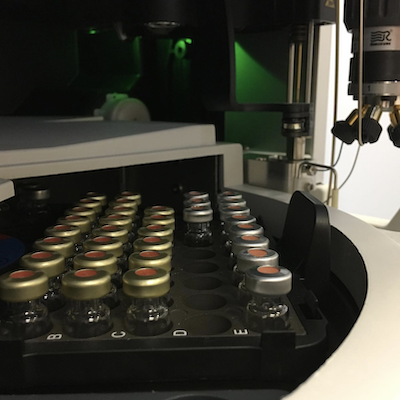
Lipidomics Studies: Finding Early Warning Signs of Brain Disease in ALD
ALD is characterized by the accumulation of very long-chain fatty acids (VLCFAs) in the body. While newborn screening enables early diagnosis, doctors cannot predict which boys will develop adrenal insufficiency or cerebral ALD (leukodystrophy) during childhood. This project addresses the urgent need for early warning signs that can predict disease progression. We use lipidomics, a technique that measures all fat molecules in blood samples, with advanced mass spectrometry equipment to provide extremely detailed information about the structure of these molecules. Using samples from the “Dutch ALD Cohort” study and its biobank, we discovered a strong correlation between elevated VLCFA-containing lipid levels and disease severity. In males, higher VLCFA lipid levels correlate with cerebral ALD, adrenal insufficiency, and severe spinal cord disease. In female patients, elevated levels correlate with severe spinal cord disease.
These findings show that measuring VLCFA-containing fat molecules in blood samples could help predict which patients are at higher risk for severe disease. Our goal is to develop a test that will enable doctors to identify high-risk patients, monitor them more closely, start treatment earlier when needed, and make better-informed decisions about each patient’s care.
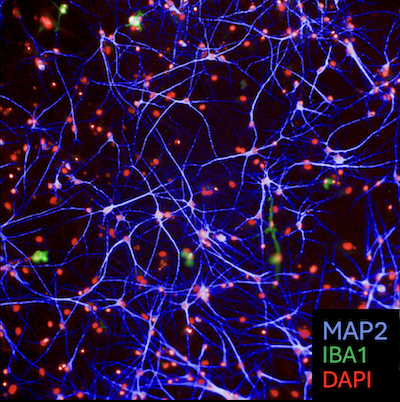
Microglia in ALD: Understanding Brain Immune Cells Using Patient Cells
This project investigates the role of microglia, which are specialized immune cells in the brain, in ALD and how their dysfunction contributes to brain damage. We create microglia in the laboratory using stem cells derived from patient blood or skin samples, which allows us to study disease mechanisms using actual patient cells. Through the analysis of gene activity (transcriptomics), fat molecules (lipidomics), and cellular structures via advanced microscopy (immunocytochemistry), we can determine how the behavior of microglia differs in ALD patients and how they respond in an “ALD environment.” We also examine how these cellular changes might affect brain function.
Our goal is to understand how microglia contribute to ALD from the beginning. This may help explain why bone marrow transplantation, which replaces a patient’s microglia with donor cells, can be effective in stopping disease progression. This knowledge could eventually lead to new treatment approaches.

The Grey Zone Project: Improving Variant Classification in Newborn Screening
Newborn screening for ALD saves lives by identifying affected boys before symptoms appear, enabling clinical monitoring and prompt treatment. However, screening also identifies genetic variants of uncertain significance (VUS) in the ABCD1 gene in newborns with no known family history of ALD. These findings leave families and clinicians uncertain about the actual risk — creating significant anxiety and making it difficult to decide on appropriate monitoring or intervention. This uncertainty is what we call the “grey zone.
In collaboration with ALD Connect, we initiated the Grey Zone Project to address this uncertainty. The project is designed for easy, accessible participation worldwide. Families with a newborn who carries a VUS in ABCD1 and has no known family history of ALD are eligible. We analyze dried blood spots (DBS) for LPC(26:0), a minimally invasive method that allows for simple at-home collection and cost-effective, ambient-temperature shipping.
If your newborn has an inconclusive genetic test result for ALD, please contact us. We are here to help clarify the risk and guide the next steps.
PeroxiSPY Probes for Assessing Functional ABCD1 Variants
Newborn screening for ALD often identifies variants of uncertain significance (VUS) in the ABCD1 gene. This means that it is unclear whether these genetic changes will cause disease. This uncertainty can lead to considerable anxiety for families. To address this challenge, we are developing a new test that directly measures the function of the ABCD1 protein in living cells. We are collaborating with Dr. Triana Amen, who developed PeroxiSPY probes. These specialized fluorescent molecules act like fatty acids and light up when they enter cellular compartments called peroxisomes. The probes mimic the natural substances that the related protein, ABCD3, normally transports. We can observe, in real time, how transport proteins move these glowing molecules into peroxisomes. We are now developing versions that specifically target ABCD1. By observing how these probes enter peroxisomes, we aim to distinguish harmless and disease-causing genetic variants. This video shows PeroxiSPY probes in action and demonstrates how they highlight peroxisomes differently depending on whether the transport proteins are functioning properly.
This technology has the potential to transform variant classification in newborn screening by enabling more accurate risk assessment and reducing unnecessary medical follow-up for families.
The ABCD1 Variant Registry: A Global Reference for Variant Classification
When a genetic test identifies a change in the ABCD1 gene, doctors must answer a critical question: Will this variant cause disease, or is it harmless? For decades, this question had limited clinical urgency because ALD was diagnosed only in symptomatic patients, whose variants were, by definition, disease-causing. In 1999, Drs. Hugo Moser and Stephan Kemp created the ABCD1 Variant Registry, a database of pathogenic mutations identified in patients with symptoms of the disease. The registry cataloged these variants alongside clinical and biochemical information to support diagnosis and genetic counseling. Everything changed with the introduction of newborn screening for ALD in New York State and its subsequent worldwide expansion. Genetic variants were suddenly being identified in asymptomatic newborns, raising an urgent question: Which variants represent true disease risk, and which are false positives? The registry transformed from a mutation catalog into an essential clinical tool for variant interpretation. Today, the registry contains over 1,250 unique ABCD1 variants, each of which is classified based on multiple lines of evidence, including clinical outcomes from affected patients, family studies, biochemical measurements, and functional laboratory data. Each variant is carefully curated and updated regularly as new evidence emerges. This evidence-based approach helps clinicians worldwide distinguish between disease-causing variants that require medical follow-up and benign variants that spare families unnecessary anxiety and interventions.
The ABCD1 Variant Registry is a unique resource in the field of rare disease genetics: a continuously updated, expert-curated database that directly supports clinical decision-making in newborn screening programs worldwide.
Visit the registry at adrenoleukodystrophy.info.

Newborn Screening for X-Linked Adrenoleukodystrophy
Early detection of ALD through newborn screening allows boys to be monitored for life-threatening adrenal insufficiency and undergo regular brain imaging to detect cerebral demyelination, which is most effectively treated when detected early. In 2013, Stephan Kemp and Marc Engelen began efforts to include ALD in the Dutch newborn screening program. Based on the Wilson and Jungner screening criteria, the Dutch Health Council, which advises the Minister of Health, recommended screening only male newborns: “Screening for ALD is only useful in male newborns because symptoms in females usually appear later and cannot be treated.” This principle – that early diagnosis must directly benefit the neonate through available treatment – shaped the program’s design. The key challenge was to develop a screening approach for boys that would identify those at risk without detecting girls with ALD or identifying other peroxisomal disorders for which there are no treatment options in childhood.
In 2017, Stephan was appointed to lead the SCAN study (Screening for ALD in the Netherlands), a pilot program designed to test the technical and ethical feasibility of sex-specific screening. The solution was the “X-counter,” a novel algorithm that determines the number of X chromosomes without detecting the presence of a Y chromosome. This four-tier screening approach, which combines elevated C26:0-lysophosphatidylcholine levels, X-counter results, and ABCD1 variant analysis, successfully identified boys with ALD while avoiding unsolicited findings. The pilot program, which was conducted in four Dutch provinces, screened over 71,000 newborns and confirmed the feasibility of this approach. Based on these results, the Dutch government added ALD to the national screening program in 2023.
Our research continues beyond implementation. Marc spearheaded the creation of international recommendations for ALD diagnosis and management in 2022, establishing evidence-based guidelines for surveillance and treatment worldwide. These recommendations are continuously updated as the field evolves. Stephan leads the ongoing monitoring and evaluation of screening outcomes with the goal of reducing false-positive referrals and improving diagnostic accuracy through the ABCD1 Variant Registry, the Grey Zone Project and biomarker discovery. Additionally, we support international initiatives to implement ALD newborn screening and share our sex-specific screening algorithm with programs worldwide that face similar ethical considerations. .