Ga naar de inhoud

Podcast: The Grey Zone in ABCD1 Variant Interpretation

What happens when newborn screening identifies a genetic variant of uncertain significance? Troy Lund and Stephan Kemp discuss the Grey Zone Project and its risk-based framework for interpreting ABCD1 variants in ALD with Dr. James Nurse of the Journal of Inherited Metabolic Diseases — and the broader hurdles of implementing genetic newborn screening. [Click to read more ▼]

Newborn screening for ALD identifies boys with pathogenic ABCD1 variants early, enabling timely intervention. However, screening also reveals variants of uncertain significance (VUS) — genetic findings where it is unclear whether the variant will lead to disease. This creates significant diagnostic uncertainty for families and clinicians alike. In this podcast episode, Troy Lund and Stephan Kemp discuss how the Grey Zone Project addresses this challenge through a risk-based framework, and what it means in practice for families and clinicians navigating an inconclusive screening result.
Prognostic Value of NfL in ALD-Related Myelopathy

Almost all men with ALD develop a slowly progressive spinal cord disease called myelopathy, but the rate at which this occurs varies considerably from person to person. Identifying those who will experience a faster progression of symptoms is essential for clinical care and the design of clinical trials. This study investigated whether two measurable blood proteins — neurofilament light chain (NfL) and glial fibrillary acidic protein (GFAP) — could serve as prognostic biomarkers. In a seven-year prospective longitudinal study, 66 adult men with ALD and no cerebral involvement were observed.[Click to read more ▼]

Plasma NfL and GFAP levels were measured using highly sensitive Simoa technology, and patients were stratified based on their baseline levels. Men with high baseline NfL levels showed significantly faster worsening on disability and spinal cord outcome measures, with differences already apparent within the first year of follow-up. Importantly, plasma NfL levels remained stable over time, indicating that a single measurement has lasting predictive value. GFAP stratification, by contrast, showed limited prognostic utility on its own. Baseline plasma NfL is a robust and practical biomarker for identifying men with ALD who are at higher risk for faster spinal cord disease progression. This supports the use of NfL for patient stratification in future clinical trials, making those trials more efficient and better able to detect treatment effects.

The Grey Zone Project: Risk-Based Classification of ABCD1 Variants in ALD

  • door
The Grey Zone Project: Risk-Based Classification of ABCD1 Variants in ALD
Newborn screening for ALD saves lives by enabling early treatment of adrenal disease and cerebral ALD 💙. However, challenges can arise when screening identifies a variant of uncertain significance (VUS) in the ABCD1 gene. This means that parents don’t know if their child will develop the disease. The result is years of anxiety and repeated blood tests and MRI scans under anesthesia every six months, often for children who will never exhibit symptoms in childhood.
We asked ourselves: “Can we do better?”
Through the Grey Zone Project, we developed a risk assessment framework that combines genetic data and biochemical measurements (LPC(26:0) levels).[Click to read more ▼]

After analyzing 1,627 healthy controls and 196 ALD patients with detailed clinical follow-up, we established evidence-based thresholds that classify variants into three clear categories: ‘no ALD’, ‘lower risk of childhood disease’ and ‘at risk of childhood disease’.
We applied this framework to 108 samples representing 51 unique VUSs.
🟢 26 VUSs were reclassified as ‘no ALD’.
🟡 15 VUSs were identified as ‘lower risk for childhood disease’.
🔴 10 VUSs were identified as ‘at risk of childhood disease’.
The Grey Zone Project aims to improve diagnostics. It’s also about providing families with clarity during critical moments, minimizing unnecessary medical interventions, and ensuring that children who require monitoring receive it.
All reclassification data feed back into the ABCD1 Variant Registry and ‘no ALD’ variants will be reclassified as ‘benign, confirmed by normal LPC(26:0) levels’.

International Consensus on Brain MRI in Cerebral ALD

  • door
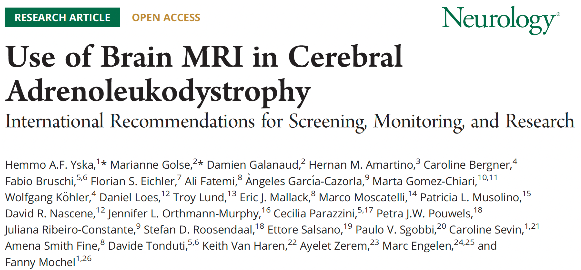
Use of Brain MRI in Cerebral Adrenoleukodystrophy: International Recommendations for Screening, Monitoring, and Research
Early detection of brain lesions through magnetic resonance imaging (MRI) is critical in ALD. This allows for timely treatment, which can prevent severe disability and death. However, there was no consensus on which MRI sequences should be used for screening and monitoring ALD lesions in clinical practice. To address this issue, 30 ALD imaging experts from nine countries employed a modified Delphi procedure, a structured approach involving iterative questionnaires and expert discussions, to reach a consensus. This is the second time our group has successfully used this approach to establish international guidelines. [Click to read more ▼]

The Results: The experts agreed on a core screening protocol for both adults and children that includes: ✅ 3D T1-weighted imaging, ✅ spin-echo T2-weighted imaging, ✅ 3D fluid-attenuated inversion recovery (FLAIR), and ✅ diffusion-weighted imaging (DWI).
Post-contrast T1-weighted imaging should be added in specific clinical scenarios. For monitoring lesion progression, the experts recommended using DWI alongside the Loes score and post-contrast imaging.
Why this matters: This harmonized protocol provides clinicians worldwide with a practical framework for screening and monitoring brain lesions in ALD, thereby improving clinical decision-making. It also identifies priority MRI sequences for future research, including diffusion tensor imaging, MR perfusion, and quantitative volumetric analyses. International collaboration through structured consensus-building is advancing standardized, evidence-based care for ALD patients.

Organoids Reveal Lipid Changes in ALD

  • door
In this work, we show how human brain organoids can model lipid abnormalities in ALD. This collaborative study, we combined our expertise in stem cell technology and the lipidomics knowledge from our team. Using human induced pluripotent stem cell (iPSC)-derived brain and spinal cord organoids, miniature 3D brain tissue models grown in the laboratory, we tracked how fat molecule composition changes during brain development over 200 days.[Click to read more ▼]

Ph.D. defense Hemmo Yska

  • door
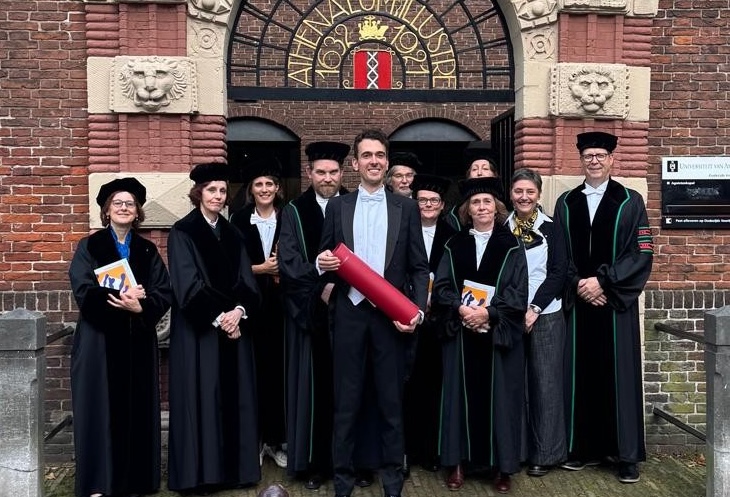
“Hora est!” On October 14, Dr. Hemmo Yska successfully defended his Ph.D. dissertation, titled “From Tissue to Clinical Practice and Back Again: A Translational Approach to Adrenoleukodystrophy”, at the Agnietenkapel at the University of Amsterdam in the Netherlands. [Click to read more ▼]

His dissertation provides a translational approach to ALD, bridging fundamental insights into pathophysiology with direct clinical applications. The dissertation deepens our understanding of ALD pathology at the cellular level. It evaluates the hypothesis that axonal degeneration with secondary demyelination is central and proposes a comprehensive theory that highlights the understudied role of astrocytes. Quantitative MRI reveals early changes in tissue at the level of normal-appearing white matter, highlighting the significant involvement of axons and myelin. Lipidomics in plasma reveals distinct profiles in severely affected patients. Meanwhile, wearable accelerometers offer reliable outcome measures for spinal cord disease that correlate with fall risk and traditional disability scales. The research shows that patients with more severe baseline disease experience faster spinal cord deterioration—an important consideration for clinical trials. Finally, exploring attitudes toward newborn screening reveals that most patients favor screening both boys and girls, offering valuable guidance for future policy.
The promotors, Marc Engelen, Stephan Kemp, and Marjo van der Knaap, would like to thank the members of the thesis committee: Annet Bosch, Carla Hollak, Fanny Mochel, Liesbeth Reneman, Marianna Bugiani, and Marielle Brouwer for their insightful and engaging feedback.

Yorrick Jaspers wins the inaugural Jelte NextGen Award

  • door
On Monday, Jaspers and Stephan Kemp were in Tytsjerk, Friesland, for the first presentation of the award. Jelte has become the face of 3FM Serious Request, the Metakids campaigns, and the BNNVARA documentary Voor de volgende Jelte (For the next Jelte) by Suzan Hilhorst. The film is about the fight against metabolic diseases. Jelte lives with MLD, an incurable metabolic disease. That day, he celebrated his fifth birthday — or, as his family called it, his 60th “monthiversary.” This was his last public appearance, which made the gathering even more meaningful. [Click to read more ▼]

The award supports young researchers who have recently graduated and are working on metabolic diseases. The prize is €320,000 for their projects. From 11 preliminary applications, three finalists were selected to submit a full proposal. Yorrick’s project, “ALD in 4D,” was unanimously rated excellent by international reviewers.

The project is developing a predictive test to determine which adrenoleukodystrophy patients, detected through early screening such as the heel prick test, will develop the fatal brain form so that life-saving treatment can start sooner and reduce uncertainty for families.

The impressive award ceremony was attended by Jelte’s family; parents of children with metabolic diseases; the mayor of Leeuwarden, Sybrand Buma; local media, including Omrop Fryslân, who interviewed Yorrick; the Metakids Scientific Advisory Board; and Metakids representatives.

The long drive back from Friesland could have been quiet and boring, but it was anything but. This recognition is wonderful for Yorrick, our Genetic Metabolic Diseases laboratory, and research into metabolic diseases.

Photos by Corien Steenstra

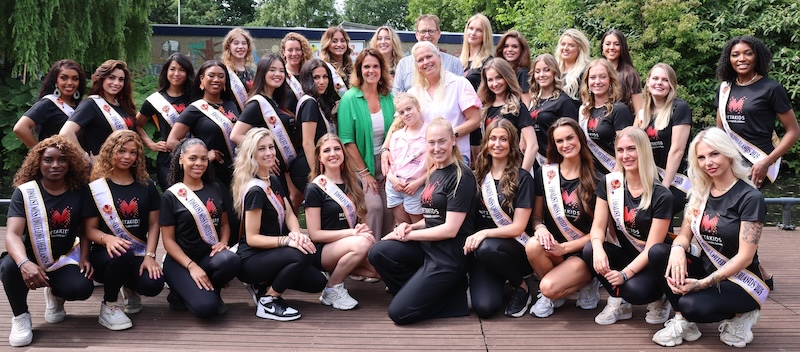
Miss United Netherlands and Metakids

Miss United Netherlands has adopted Metakids as its official charity. At a recent “Metabolic Information Session” on June 14, the contestants learned about the vital work Metakids does for children with metabolic diseases and their families. This work includes raising awareness and supporting research. Stephan Kemp spoke about metabolic diseases and the importance of newborn screening. The contestants also met Marieke and Féline, who shared their personal experiences. Now, inspired and well-informed, the group is ready for their charity work! 💙

Ph.D. defense Yorrick Jaspers

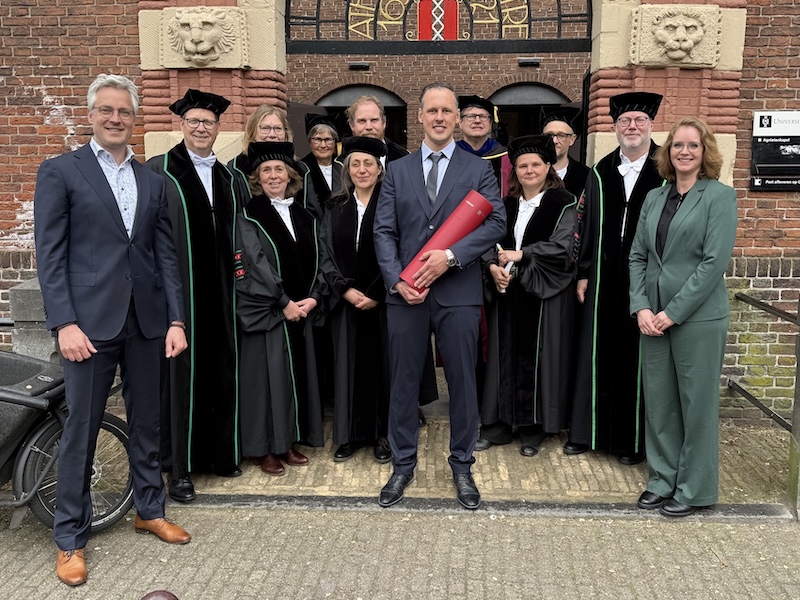
On April 23 2025, Yorrick Jaspers of the Amsterdam UMC successfully defended his Ph.D. dissertation entitled “Navigating the Lipidomic Landscape of Adrenoleukodystrophy” at the Agnietenkapel of the University of Amsterdam. [Click to read more ▼]

Yorrick’s work advances the diagnosis and understanding of X-linked adrenoleukodystrophy (ALD) by integrating targeted and comprehensive lipidomics. His research shows that analyzing LPC 26:0 is better than using traditional VLCFA measurement to diagnose ALD. It is faster, less labor-intensive, and more reliable, especially for women. Lipidomic profiling in plasma, cerebrospinal fluid, and cell models revealed that VLCFAs accumulate in distinct lipid classes, strongly correlating with disease severity in both sexes. This study identifies promising candidates and highlights the potential of advanced lipidomics and biobank resources for discovering future prognostic biomarkers and improving patient care.

We, the promotors Gajja Salomons, Marc Engelen and Stephan Kemp and the paranymphs Michel van Weeghel and Inge Dijkstra, would like to thank the members of the thesis committee: Annet Bosch, Anita Boelen, Judith Jans, Martin Giera,Troy Lund and Noam Zelcer for the inspiring and entertaining opposition.

Editorial in JAMA Pediatrics

Cover page