Our approach
Our work spans the full translational range, from understanding how ALD progresses and finding early warning signs in the blood, to improving newborn screening and classifying genetic variants.
Research programs
Natural history
The Dutch ALD Cohort
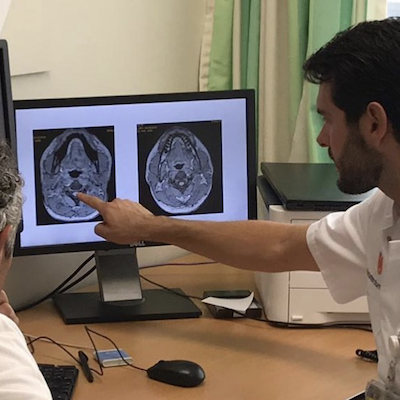
To develop effective treatments and understand how ALD progresses over time, it is necessary to carefully track patients from diagnosis throughout their lifetime. This is called a natural history study. Since 2015, we have been studying the world’s largest group of boys, men, and women with ALD through the Dutch ALD Cohort at the Amsterdam Leukodystrophy Center.
One of the biggest challenges in ALD is that we cannot predict how the disease will affect each patient. Some develop severe symptoms early, while others remain relatively stable for years. This unpredictability complicates the design of clinical trials and makes it difficult to know when to start treatment. Our cohort follows over 170 patients, collecting blood samples, brain scans, and clinical measurements at regular intervals. This has already revealed significant patterns in disease progression and identified potential blood markers that correlate with disease severity, such as neurofilament light (NfL), a protein released when brain cells are damaged.
This ongoing study provides the essential foundation for designing and conducting clinical trials. By identifying early warning signs and measurement tools, we can better predict disease courses and evaluate whether new treatments are making a real difference.
Lipidomics
Early warning signs of brain disease
ALD is characterized by the accumulation of very long-chain fatty acids (VLCFAs) in the body. While newborn screening enables early diagnosis, doctors cannot predict which boys will develop adrenal insufficiency or cerebral ALD during childhood. This project addresses the urgent need for early warning signs that can predict disease progression.
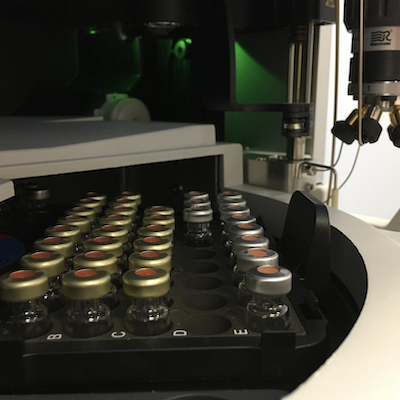
We use lipidomics, a technique that measures all fat molecules in blood samples, with advanced mass spectrometry to provide detailed information about their structure. Using samples from the Dutch ALD Cohort biobank, we discovered a strong correlation between elevated VLCFA-containing lipid levels and disease severity. In males, higher levels correlate with cerebral ALD, adrenal insufficiency, and severe spinal cord disease; in females, with severe spinal cord disease.
These findings show that measuring VLCFA-containing fat molecules in blood could help predict which patients are at higher risk. Our goal is a test that lets doctors identify high-risk patients, monitor them more closely, start treatment earlier when needed, and make better-informed decisions about each patient’s care.
Metabolic rerouting
Turning toxic fats harmless
Most people with ALD eventually develop a slowly progressive spinal cord disease called myelopathy that affects virtually all men and most women with ALD. This disease gradually impairs walking, balance, and bladder control. Currently, there is no treatment that can stop or slow it. One of the greatest unmet needs in ALD is a disease-modifying therapy for myelopathy.
ALD is characterized by the buildup of very long-chain fatty acids (VLCFAs). We discovered that not only how much VLCFA accumulates matters, but also whether these fats are saturated. Saturated VLCFAs are toxic to cells, whereas the monounsaturated form is not. The enzyme stearoyl-CoA desaturase-1 (SCD1) converts saturated fats into the harmless monounsaturated form. Increasing SCD1 activity reroutes toxic fats into a form that cells can tolerate. In 2021, we demonstrated that this metabolic rerouting reduces VLCFA levels in patient cells and ALD mice (Raas et al., 2021).
However, the compounds used in those initial experiments have side effects that render them unsuitable for the long-term treatment that ALD requires. In collaboration with Noam Zelcer’s laboratory at Amsterdam UMC, we are using genome-wide genetic screens to identify safer and more specific methods of increasing SCD1. We are validating the most promising candidates in cell and animal models. Our goal is to lay the groundwork for a clinical trial. Since everyone with ALD accumulates VLCFAs, such a treatment could one day benefit both men and women, including women, who have long been excluded from ALD trials.

Genomics
The 1000 ALD Genomes project
Although ALD is caused by changes in a single gene, ABCD1, the disease is remarkably unpredictable. Brothers who carry the same ABCD1 variant can experience very different outcomes, ranging from childhood cerebral ALD to slowly progressive spinal cord disease in adulthood. This suggests that other factors influence how the disease progresses. Other genes, known as modifiers, likely shape how the body handles fats, inflammation, and gene expression.
The 1000 ALD Genomes project, led by Marc Engelen, searches for these modifiers by reading the complete genetic code of people with ALD (whole-genome sequencing) and linking it to the Dutch ALD Cohort’s detailed clinical data. Because these patients are carefully monitored over many years, their data is highly reliable for this type of analysis. We have started with the first 100 patients and are building a genomic database that can grow over time and be shared with researchers worldwide. This first phase is supported by a gift from Will to Cure ALD.
Such a resource could help in two ways. First, it may allow doctors to better predict how ALD will develop in an individual. This is becoming increasingly important as newborn screening identifies children long before any symptoms appear. Thus, monitoring and care can be tailored to each person’s risk. Additionally, by revealing the biology behind these very different disease courses, it could point to new treatment targets.

Cell models
Microglia in ALD
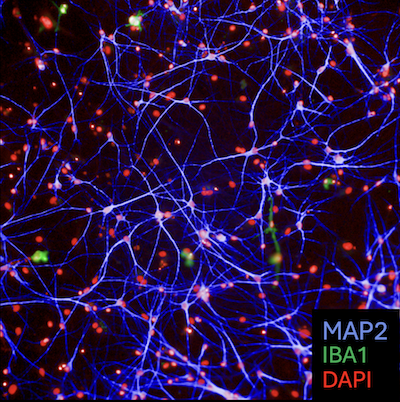
This project investigates the role of microglia, specialized immune cells in the brain, in ALD and how their dysfunction contributes to brain damage. We create microglia in the laboratory using stem cells derived from patient blood or skin samples, which allows us to study disease mechanisms using actual patient cells.
Through the analysis of gene activity (transcriptomics), fat molecules (lipidomics), and cellular structures via advanced microscopy, we can determine how microglia behave differently in ALD patients and how they respond in an ALD environment. Our goal is to understand how microglia contribute to ALD from the beginning. This may help explain why bone marrow transplantation, which replaces a patient’s microglia with donor cells, can stop disease progression, and could eventually lead to new treatment approaches.
Variant classification
The Grey Zone Project
Newborn screening for ALD saves lives by identifying affected boys before symptoms appear. However, screening also identifies genetic variants of uncertain significance (VUS) in the ABCD1 gene in newborns with no known family history of ALD. These findings leave families and clinicians uncertain about the actual risk, creating significant anxiety and making it difficult to decide on appropriate monitoring. This uncertainty is what we call the grey zone.
In collaboration with ALD Connect, we initiated the Grey Zone Project to address this uncertainty. It is designed for easy, accessible participation worldwide. Families with a newborn who carries a VUS in ABCD1 and no known family history of ALD are eligible. We analyze dried blood spots for LPC(26:0), a minimally invasive method that allows simple at-home collection and cost-effective, ambient-temperature shipping.
If your newborn has an inconclusive genetic test result for ALD, please contact us. We are here to help clarify the risk and guide the next steps.

Functional testing
PeroxiSPY probes
Newborn screening often identifies variants of uncertain significance (VUS) in the ABCD1 gene, meaning it is unclear whether these genetic changes will cause disease. To address this, we are developing a test that directly measures the function of the ABCD1 protein in living cells, in collaboration with Dr. Triana Amen, who developed PeroxiSPY probes.
These fluorescent molecules act like fatty acids and light up when they enter cellular compartments called peroxisomes. We can observe, in real time, how transport proteins move these glowing molecules into peroxisomes, and we are now developing versions that specifically target ABCD1. By observing how the probes enter peroxisomes, we aim to distinguish harmless from disease-causing variants. The video shows PeroxiSPY probes in action, highlighting peroxisomes differently depending on whether the transport proteins function properly.
This technology could transform variant classification in newborn screening by enabling more accurate risk assessment and reducing unnecessary medical follow-up for families.
Reference database
The ABCD1 Variant Registry
When a genetic test identifies a change in the ABCD1 gene, doctors must answer a critical question: will this variant cause disease, or is it harmless? In 1999, Drs. Hugo Moser and Stephan Kemp created the ABCD1 Variant Registry, a database of pathogenic mutations identified in patients with symptoms of the disease, cataloged alongside clinical and biochemical information.
Everything changed with newborn screening. Genetic variants were suddenly being identified in asymptomatic newborns, raising an urgent question: which variants represent true disease risk, and which are false positives? Today the registry contains over 1,250 unique ABCD1 variants, each classified on multiple lines of evidence, including clinical outcomes, family studies, biochemical measurements, and functional laboratory data. Each variant is carefully curated and updated as new evidence emerges.
The ABCD1 Variant Registry is a unique resource in rare disease genetics: a continuously updated, expert-curated database that directly supports clinical decision-making in newborn screening programs worldwide. Visit the registry at adrenoleukodystrophy.info.
Newborn screening
Screening for ALD in the Netherlands
Early detection of ALD through newborn screening allows boys to be monitored for life-threatening adrenal insufficiency and to undergo regular brain imaging to detect cerebral demyelination, which is most effectively treated when caught early. In 2013, Stephan Kemp and Marc Engelen began efforts to include ALD in the Dutch newborn screening program. The Dutch Health Council recommended screening only male newborns, since symptoms in females usually appear later and cannot be treated in childhood. The challenge was to identify boys at risk without detecting girls with ALD or other untreatable peroxisomal disorders.
In 2017, Stephan was appointed to lead the SCAN study (Screening for ALD in the Netherlands), a pilot testing the technical and ethical feasibility of sex-specific screening. The solution was the X-counter, an algorithm that determines the number of X chromosomes without detecting a Y chromosome. This four-tier approach, combining elevated C26:0-lysophosphatidylcholine, X-counter results, and ABCD1 variant analysis, identified boys with ALD while avoiding unsolicited findings. The pilot screened over 71,000 newborns across four provinces and confirmed feasibility; based on these results, the Dutch government added ALD to the national program in 2023.
Our research continues beyond implementation. Marc led the creation of international recommendations for ALD diagnosis and management, and Stephan leads ongoing monitoring of screening outcomes to reduce false-positive referrals through the ABCD1 Variant Registry, the Grey Zone Project, and biomarker discovery. We also support international initiatives to implement ALD newborn screening and share our sex-specific algorithm with programs facing similar ethical considerations.